August 18, 2021

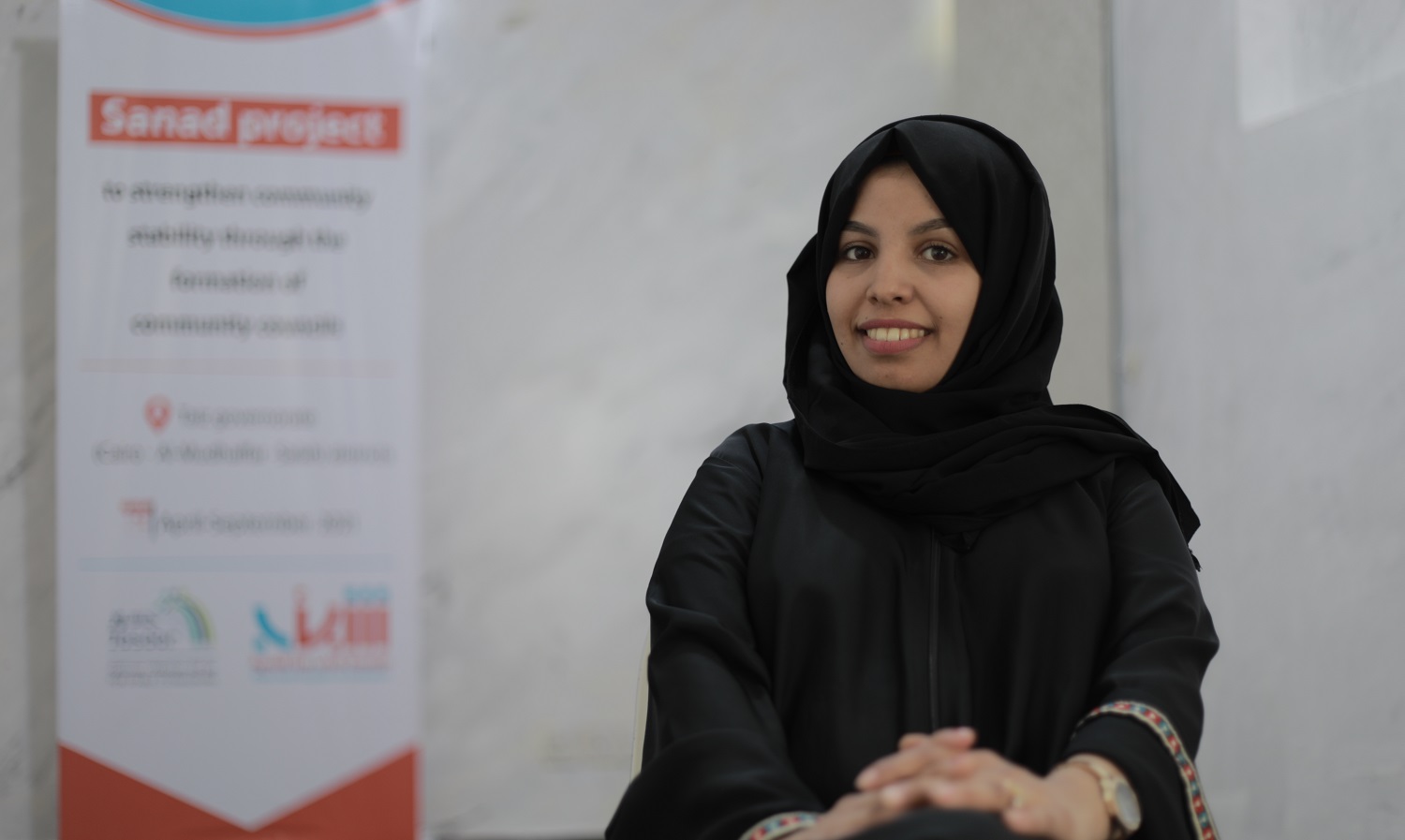
Wiam.. The First Woman to Lead the Community Council of Salah District within Sanad Project

Change is made by insisting on achieving it, and here is Wiam Al-Maqtari crowning her participation in Sanad Project by becoming the first woman to head a community council in Taiz Governorate.. Wiam, aged 28 – law graduate, heads the community council of Salah District, and works in complete harmony with the council members to support the local authorities in resolving community conflicts. “The challenge was that the team consisted of both local authority and youth members, and I tried to take into account the sensitivity of the difference in age and experience between me and them, and they trusted me,” says Wiam. Determination Wins Wiam started making her way into community work in 2018, and with her renewed insistence on continuing, she applied to participate in Sanad project, through its advertised form, after which she got informed of her acceptance in the project, to be a real opportunity for a new start through which she could make change. She says, “I often focus on the humanitarian and human rights field, especially what is related to women, but to ​​work in the community council was my greatest step to prove the ability of women to achieve success.” Merit and Trust Wiam found herself worthy of running for the presidency of the community council, after the intensive sessions she had received through Sanad project. In the second stage, the stage of forming community councils, Wiam ran for the presidency of the community council of Sala District, where she lives, and she was the only woman running for it against another candidate, but she won the majority of votes. Unique Experience “Heading a community council is a very wonderful experience,” said Wiam, who has benefited a lot from it and still do, stressing, “The challenge was that the team was composed of both local authority and youth members, but I tried to take into account the  differences in age and experience between me and them, and they trusted me.” “There are difficulties and challenges concerning the belief of the rest of the council members that they are led by a woman. Although I have noticed that there were still those who thought that way, such differences dissolved after the meetings we held,” adds Wiam. About her feeling after being elected as the head of the council, Wiam says: “After I had been elected to the presidency of the council, I felt responsible, and that gave me a great positive push and a high moral appreciation to take this responsibility as it should be.” Role of Woman “My succeeding in breaking the stereotype about women’s participating in community councils is mainly due to Sanad project,” she says, noting that the support she got from the project management and advisor was an additional factor that enabled her to achieve that success, which she believes is a success for all women in her district. Wiam also believes that women have the same great role as men, stressing that women have proven their effectiveness and efficiency in all areas of life and that their role is no longer limited to education or health. She also explains, “Women now share in decision-making, and they have participated in most areas of life, where women have been volunteers and participated in community work that serve the community. They have, too, become entrepreneurs who have strongly entered the field of entrepreneurship and have contributed to development projects. They have entered the political field as well as the media field and may others, and they now have an entity.” But she believes that the role of women in our country remains framed by customs, traditions and inherited and retrograde ideas, noting that the lack of economic empowerment of women also hinders their empowerment in other fields. Wiam Al-Maqtari’s success story comes within the framework of the community councils formed by Sanad project, which is implemented by Sheba Youth Foundation in partnership with Jusoor Program, aiming to support the local authorities in resolving community conflicts through the formation of those community councils.
August 17, 2021

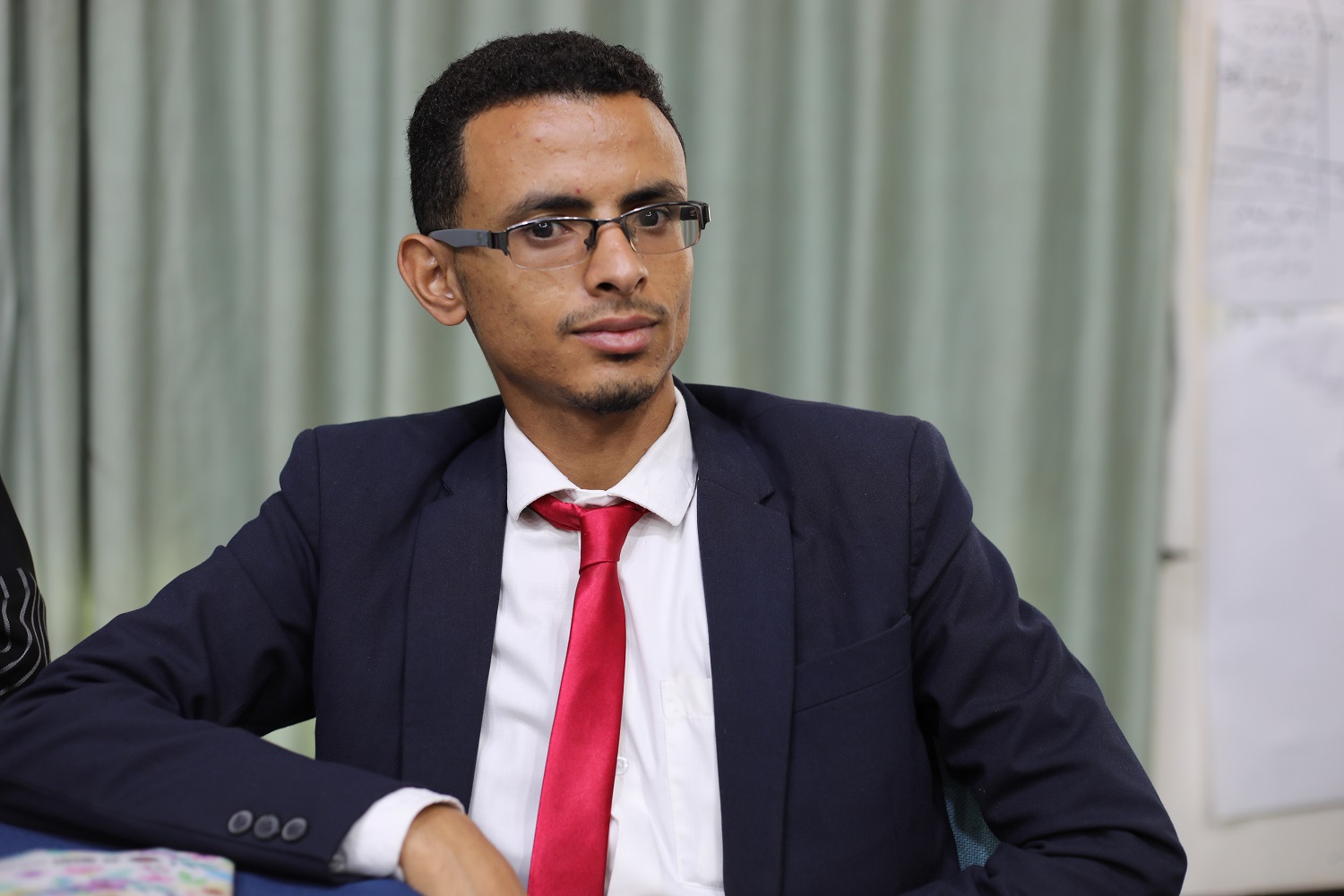
Sanad Contributes to Resolving a Local Conflict

Story Summary Activist Ahmed Al-Ameri, aged 26, who used to work as a field surveyor for Al-Nahdha Foundation, and he is now a member of the community council formed by Sanad Project in Al-Mudhaffar District, Taiz Governorate, southwest of Yemen, explains how he reflected what he had learned in the conflict analysis training he had received in Sanad Project, funded by Jusoor Program, which is implemented by Sheba Youth Foundation. That is, Ahmed succeeded in stopping a conflict between two families over collecting rainwater from the roof of their building. After the conflict was stopped, he contributed to reach a terminal solution to their problem, after they almost went to the police station. Ahmed emphasizes that if the conflict had occurred before he had received the course, he would not have dealt with it the way he did after the course, stressing the great impact the program had on his way of thinking. “The first stage of Sanad Project was a ten-day training, during which we have got acquainted with many concepts related to conflicts, their management and how to deal with them. As a social activist, I have broadened my horizons and learnt new skills, which was a really excellent addition to me. Moreover, I have learnt new concepts, sech as project management, from writing the proposal to preparing the budget, and this is a gain I am happy with, since I work in this field and it will positively reflect on my work in the volunteer and development field and in achieving peace that I seek in my community,” says Ahmed. Story Details “Perhaps if we had come across this problem with the narrow view of conflict and its analysis, my friend would have taken one side.” By this sentence, Ahmed Al-Ameri, aged 26, summed up his story with Sanad Project, implemented by Sheba Youth Foundation in Taiz Governorate, southwest of Yemen. Ahmed tells us how the course of Conflict Concepts and Its Analysis helped him to contribute to resolving a conflict between two families in a neighborhood in Al-Mudhaffar District, in the center of Taiz. He says, “While I was visiting my friend, in Sina area, after returning from the training, I came across a dispute between two families in the same building where my friend lives.” “My friend has a four-floor house with apartments rented to several people. Some of those apartments are resided by the sons of the landlord. And due to the rise in water prices, people race to collect rainwater from the rooftops, and from here the conflict issue began,” he explains. Ahmed continues, “One of the families (Q.S.) wanted to collect rainwater to their water tank when another family wanted the same thing, which was the family of one of the landlords. The landlord’s family put a dirty blanket over the tank of (Q.S) family in order to wash it with rainwater, and then we heard the shouts of the two families, after the (Q.S) family dropped the blanket onto the ground, preventing the dirty water from falling into their tank.” Ahmed explains the details of the conflict, saying, “There was a fight between the women and children of the two families, and my friend and I intervened with a solution after we stopped the fight.” Ahmed and his friend suggested a solution to the problem, as they prevented (Q.S.) family from collecting water and prevented the other from placing the blanket over the tank. Then they convinced the two families to transfer the problem to their men so as to find a thorough solution to the dispute, collecting rainwater from the rooftop for all tenants. Ahmed adds, “After we listened to both parties and the two families agreed to come down from the roof so that the problem would not worsen, and after 15 minutes of calm, all of a sudden, a man from the other family showed up and nervously insulted (Q.S.) family.” “This was the result of listening to just one of the parties to the problem. Then we intervened again and calmed the man and explained to him what happened. But, because of his attacking them, (Q.S.) family transferred the case to the police station, where the argument was against the attacking man,” he explains. Describing the way he reacted to the conflict when in the police station, Ahmed says, “We waited until the next day for a relative of (Q.S.) family to come so we could sit with him as mediators, and we explained the problem to him in detail, since we were eyewitnesses to everything happened. After a while, my friend and I were finally able to convince the relative with a solution to the problem without the help of the police.  We suggested that the roof gate should be kept closed to all the tenants as well as the landlords. So, we locked the gate, leaving the key with one of the landlords who was not involved in the problem, provided that it is not to be opened but when necessary then closed.”  “Perhaps if we had come across the same problem before removing the narrow view of the conflict concepts and its analysis, my friend would have taken one side, especially since he is a relative of one of the conflicting families. However, what I had learnt in the project helped me remove my friend’s narrow view, and we looked at the problem impartially, as well as I told him that we needed to be a party to the solution, not a party to the problem,” Ahmed continues telling his story. And he concludes, “We faced the conflict with a wide perception. This perception was generated thanks to my experience in the first stage of Sanad Project, which is implemented by Sheba Youth Foundation for Development.”

August 10, 2021

Youth-led advocacy campaigns

The project aims to amplify the voices in support of peace and spread awareness regarding the basic principles of the peace process and community cohesion and their benefits. 12 young men and women from youth initiatives from Taiz and Abyan Governorates were trained in advocacy and lobbying as a first stage, and then five youth initiatives from the two governorates will be provided with financial grants to implement advocacy campaigns in several aspects that support peace building within the program “Enhance the Pathways to Peace in Yemen – Advocacy and Lobbying Activities.” This project is being implemented with funding from Resonate! Yemen Foundation. Youth-led advocacy campaigns In Progress 64%

August 10, 2021

Sanad Project to Support Community Stability

The project aimed to improve the relationship between the community and the local authorities, through the formation of community councils which are meant to help the local authorities resolve conflicts in Taiz Governorate. The Foundation selected 30 male and female participants from Salah, Al-Mudhaffar and Al-Qahera Districts. They were sellcted from influential youth in the community and local authorities to be members of the community councils. The participants received a training program that included: – Conflict Analysis – Determining the Interventions Required to Resolve Conflicts – Writing Project Proposals After the training was completed, the participants carried out a field visit to survey conflicts in the targeted districts, where they applied what they had been trained on, and identified the most possible interventions. They also wrote project proposals for the required interventions, and they implemented three dialogue sessions for community representatives in the three districts to sign an agreemen aiming to reduce community conflicts. The three community councils implemented three qualitative projects which contributed to resolving community conflicts, as follows: – Sewerage System for Al-Manjara and Al-Mahatta Neighborhoods, Salah District. – Rehabilitation and maintenance of Sheb Saleet Water Well in Jabal Jarra, Al-Qahera District. – Rehabilitation of the Sewerage System of Al-Haqr Area, Al-Mudhaffar District. Sheba Youth Foundation for Development implemented this project in partnership with Jusoor Program.

August 4, 2021

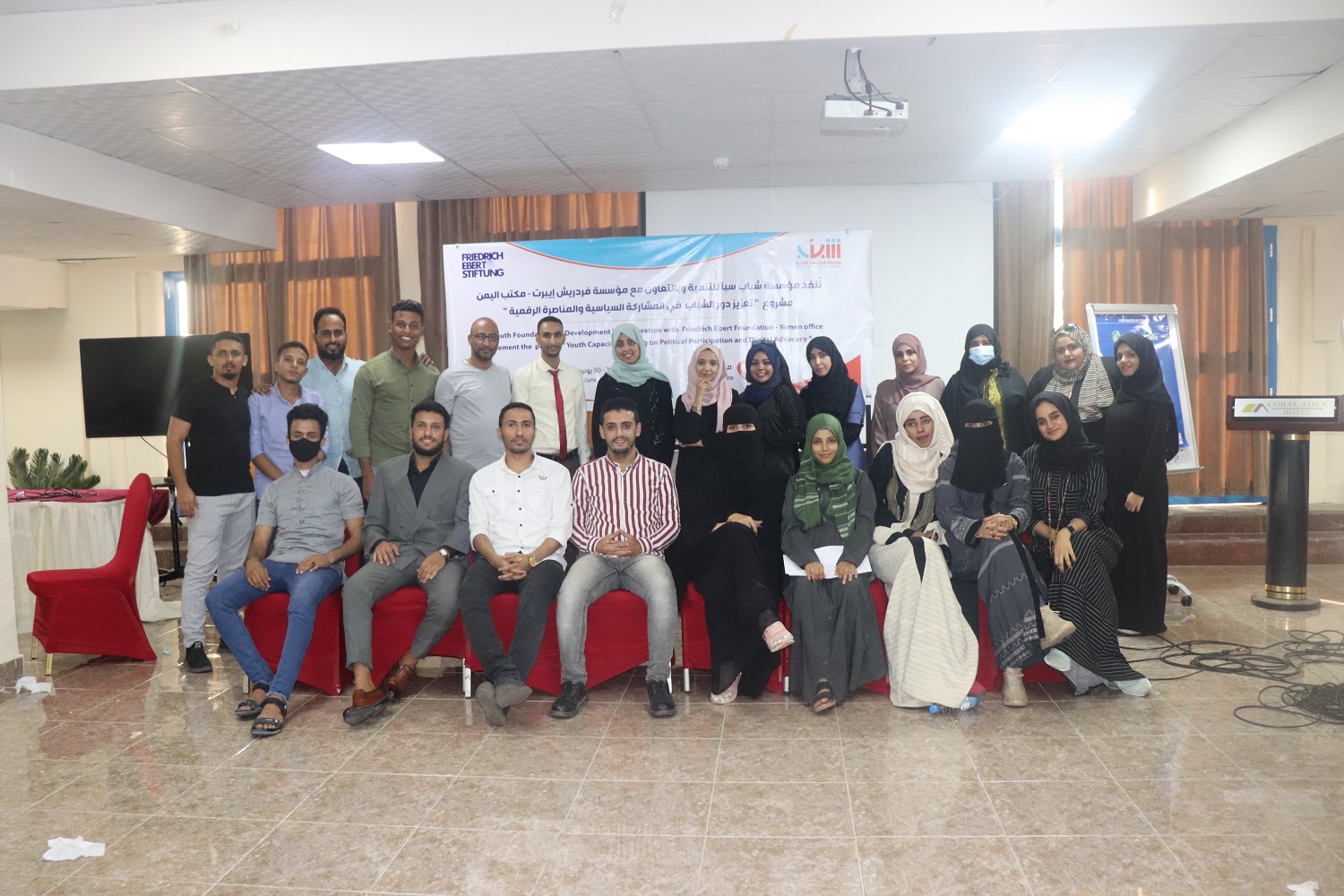
The second version of the project “Political Participation and Digital Advocacy” – Aden

After the qualitative success of the first version of the project last year, 2020, Sheba Youth Foundation implemented the second version of the project “political participation and digital advocacy” – Aden. The project aims to enhance the role of Yemeni youth in the field of political participation and digital advocacy for issues of public concern. Within the project, 20 young men and women from Aden Governorate were trained for 4 days in the following topics: The concept of political participation, its types, tools and mechanisms. The concept of digital advocacy and how to advocate for issues of public interest on various social media platforms. Training in digital security and protecting activists while launching advocacy campaigns related to issues of public interest. At the end of the training, the participants conducted a digital advocacy campaign  entitled #Jeizy_Jeizak, in which they applied what they had learned in the training. The campaign advocated for enhancing the role of women in the political process. Also, “Sada platform” , a youthful platform concerned with advocating for public opinion issues, was launched as a result of youthful efforts that brought together the first and second generations. This project was implemented in cooperation with Friedrich Ebert Foundation – Yemen Office.

January 23, 2021

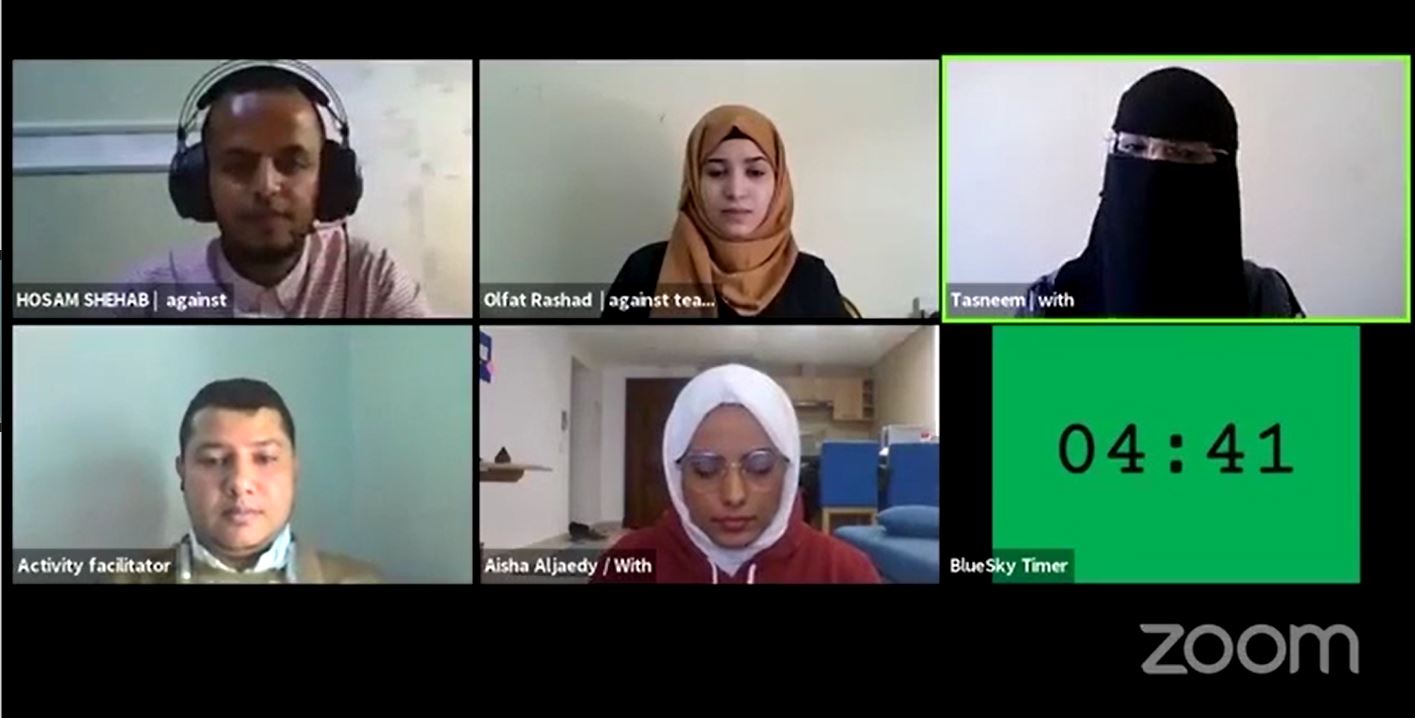
Online Debate Project

This project aims to enhance the capabilities of Yemeni youth on the skills of debate and presentation in order to make them able to present and express their opinions and ideas and argue for them in order to be active in society. In this project, 18 young men and women from different areas of Yemen were trained on debate skills. And as a real output of the project, three live debates were conducted and broadcast on social media, on the following topics: Political components contributed to the peace process in Yemen. Social media has a negative role in promoting the peace process. Civil society organizations exacerbated the humanitarian crisis in Yemen.   At the end of the three rounds of debates, voting was opened for the public and the winner was announced, and you can watch the debates in the following video. This project was sponsored by Resonate-Yemen Foundation https://www.youtube.com/watch?v=7tDkdOz1jf4https://www.youtube.com/watch?v=Av9Xkj3GeX0https://www.youtube.com/watch?v=wGZGYt3RNAk

November 5, 2020

Enhance the Capabilities of Youth in Writing Public Policy Papers

This project aims to enhance the role of Yemeni youth in participating in public life through writing public policy papers. Within this project, 15 young men and women researchers and activists as well as representatives of the executive offices of the local authority were trained for five consecutive days on the following topics: The concept of public policy papers, their types and importance. Writing public policy papers. At the end of the project, the participants chose social problems, which Taiz is suffering from, and then started searching and writing policy papers on those problems, finding solutions to them, and coming up with recommendations. The participants were divided into two groups. The first group dealt with the problem of overcrowding in the Central Market, and the second group dealt with the problem of insufficient work opportunities and the coordination among local and international civil society organizations in Taiz Governorate. This project was sponsored by CARE International – Yemen Office.

October 8, 2020

Enhance the Role of Youth in Political Participation and Digital Advocacy

This project aims to enhance the role of Yemeni youth in the field of political participation and digital advocacy for issues of public concern. Within this project, 23 young men and women from different areas in Yemen were trained for 11 days on the following topics: The concept of political participation, its types, tools and mechanisms. The concept of digital advocacy and how to advocate for issues of public concern on various social media platforms. Training on digital security and how activists can safely launch their advocacy campaigns related to issues of public concern. At the end of the training, the participants launched a digital advocacy campaign, applying what they had learned in the training and it was entitled #in riyals_what_ to buy. Then the campaign advocated the issue of the rise of dollar and other hard currencies values against the Yemeni riyal’s, which led to the high prices of the basic items related to the livelihood of citizens. Moreover, at the end of the project, a manual for youth entitled “Political Participation and Digital Advocacy” was issued, and it is one of the most important manuals now available in this field. This project was funded by the German Foundation, Friedrich-Ebert-Stiftung (FES) – Yemen Office.

September 25, 2020

Enhance the Role of Youth Initiatives in the Social Change

The project aims to enhance the role of youth initiatives in the community organization. Within the project, 20 young men and women representing 10 youth initiatives from different areas in Yemen were trained for three consecutive days on the following topics: Leadership skills Decision-making skills in youth initiatives The essentials of a good meeting for members of youth initiatives Team coordination and horizontal accountability in voluntary work This project was sponsored by Middle East Partnership Initiative (MEPI).

April 23, 2020

Salamat for Digital Security

The project aims to raise public awareness of digital safety for everyone through publishing a number of posts and posters so they can be safe when working on the Internet. The project mainly focused on: Two-step verification, which is one of the most important means of securing personal information. Use encryption, secure your device, and learn how to draft a strong password and how to keep it secure. Use “Signal” to make a secure connection and find out about fake emails and links. This project was within the regional project Salam@, which was implemented by SecDev Foundation in five countries in the Middle East and North Africa (Algeria – Tunisia – Jordan – Morocco – Bahrain). In Yemen, this experience was self-implemented by Sheba Youth Foundation under the supervision of SecDev team in the Middle East.